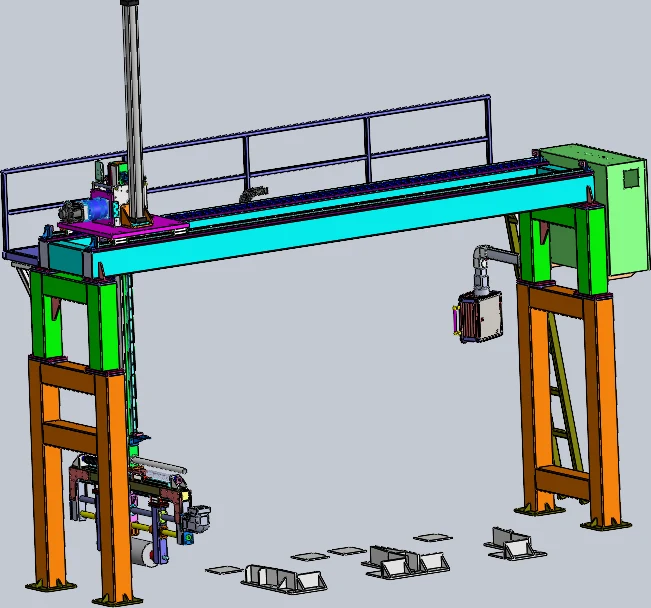
Core parameter overview
| Structure | Stable gantry truss |
|---|---|
| Clamping | Forward and reverse lead-screw clamping |
| Horizontal motion | Servo driven |
| Lift and gripper options | Pneumatic lifting gripper with extended guide option |
| Operation | Automatic continuous billet-loading cycle |
| Line-capacity note | Catalog reference states potential capacity improvement above 25%, subject to the final cycle and layout |
| Typical use | Heating furnace loading and billet transfer in aluminum extrusion preparation lines |
Buyer pain point, application, solution, and proof
| Buyer pain point | Buyers need to know whether Aluminum Furnace Billet Loading Manipulator matches the profile drawing, accuracy target, output plan, voltage, operator workflow, and after-sales document requirements. |
|---|---|
| Application scenario | Typical review scenarios include heating furnace loading and billet transfer in aluminum extrusion preparation lines, with profile alloy and workshop layout checked before quotation. |
| Proposed solution | Use Aluminum Furnace Billet Loading Manipulator together with related upstream and downstream equipment, then confirm the process sequence, clamping method, and local electrical configuration. |
| Data proof shown here | The page provides model category, automation level, readable parameter table, localized voltage note, related equipment links, and procurement FAQ in HTML text. |
| Information still needed | Real photos, final certificate files, machine serial data, customer-approved cases, and project-specific test videos should be added after confirmation. |
Full technical notes
Aluminum Furnace Billet Loading Manipulator is listed for aluminum profile workshops that need clear model information, machine type, processing range, voltage notes, application context, and FAQ in readable text.
- Suitable alloys: Heated aluminum billets and extrusion-line material handling
- Automation level: Automatic continuous cycle
- Application examples: aluminum profiles, tubes, billets, extrusion preparation, machine tending, palletizing, packaging, welding, spraying, and industrial material handling where relevant.
- Documents that can be prepared: product manual, CAD drawing package, parameter sheet, maintenance notes, and packing list.
Procurement decision notes
| New equipment purchase | Use the model parameters, application range, voltage note, and output target to confirm whether this machine fits the workshop process. |
|---|---|
| Custom configuration | Send profile drawings, alloy, process list, available floor space, and local electrical requirements before quotation. |
| Production line planning | Review the related equipment links below to connect cutting, milling, routing, crimping, CNC machining, and transfer steps. |
| Distributor or wholesale inquiry | Provide target market, expected model mix, documentation language, and spare part planning requirements. |
Application and workflow fit
This model should be reviewed together with the profile shape, drawing tolerance, daily output target, operator skill level, workshop voltage, and upstream or downstream machines. For non-standard aluminum profiles, the drawing and process sequence should be checked before confirming the final equipment configuration.
Delivery, quality control, packing, and documents
| Lead time review | Lead time depends on model availability, custom options, electrical standard, test workload, packing method, and destination market. Peak season should be checked before final quotation. |
|---|---|
| Quality control | Recommended checks include assembly inspection, electrical check, clamping and motion test, trial cutting or machining where applicable, photo or video confirmation, and document checklist. |
| Compliance documents | CE, ISO, electrical information, manuals, packing list, maintenance notes, and test records should be matched to the exact model and destination requirements. |
| Packing and transport | Export wooden packing, fixing points, moisture protection, shipping marks, container plan, and destination port should be confirmed before shipment. |
| Quotation speed | Send profile drawing, alloy, voltage, required process, target capacity, project stage, and destination port or city to shorten the technical review. |
Localized GEO module
| Market page | Australia |
|---|---|
| Voltage note | 415V 50Hz common workshop supply |
| Document note | Electrical compliance notes and guarding review for Australian workshops |
| Local workshop context | Australian users often compare cutting accuracy, dust control, and spare part planning. |
Related equipment in the same line
- ZDJ Series Precision Automatic Aluminum Saw
- Square Tube Rotary Cutting Saw
- ZDLBJ Series Fully Automatic Aluminum Tube Drawing Machine
- Automatic Aluminum Billet Peeling Machine
- STJ Series Hydraulic Aluminum Tube End Reducing Machine
- CR Series Six-Axis Industrial Robot
- MD Series Four-Axis Palletizing Robot
Selection FAQ
What controls positioning and clamping?
The listed structure uses servo horizontal movement and lead-screw clamping for repeat billet placement.
Can the manipulator run continuously?
It is presented for automatic continuous operation, with final cycle time confirmed against furnace spacing and billet handling steps.
What drawings are needed?
Provide the furnace opening, billet diameter and length, rack position, required cycle, floor layout, and safety-zone requirements.
How long is the usual delivery time and can peak season affect it?
Delivery time depends on model availability, custom configuration, electrical standard, testing workload, packing, and shipping plan. Peak season can affect lead time, so buyers should confirm the required delivery date early in the quotation process.
How is quality controlled before shipment?
Quality review should include assembly inspection, electrical check, clamping and motion test, sample cutting or machining where applicable, packing review, photo or video confirmation, and document checklist before shipment.
Do you provide certificates, testing reports, or compliance documents?
Certificate and compliance documents should be matched to the exact machine type and destination market. CE, ISO, electrical information, packing list, manuals, and test records should be confirmed before public use or order confirmation.
What packaging and transportation methods are available?
Packaging and transport depend on machine size, weight, destination port, container plan, and whether the order includes one machine or a full line. Export wooden packing, fixing points, moisture protection, and shipping marks should be reviewed before shipment.
How are quality issues handled after delivery?
The buyer should keep installation photos, machine serial information, electrical setting details, fault video, and sample profile information. The support path can then separate operation setting, spare part replacement, electrical issue, or transport damage.
How can buyers get a quotation faster?
A fast quotation needs company name, country, buyer role, equipment model, profile drawing, alloy, voltage, required process, target capacity, project stage, and destination port or city.