
How the cell works
For aluminum fabrication, the robot's role is usually decided by the fixture: when parts arrive in a repeatable position, the robot can run tack paths, hold pieces for a manual welder, or present assemblies to a positioner.
Each project reviews part tolerance, fixture design, and weld access before a path is proposed. The goal is a station where the robot handles the repeatable motion and the welder or weld package handles the process judgment.
Typical cell parameters
| Robot | CR series six-axis |
|---|---|
| Typical role | Part positioning, fixture holding, tack paths |
| Repeatability | +/- 0.05 mm class for taught paths |
| Fixture requirement | Repeatable part location is the deciding factor |
| Integration | Works with positioner and weld power source interlocks |
Arc-on time share in a supported station
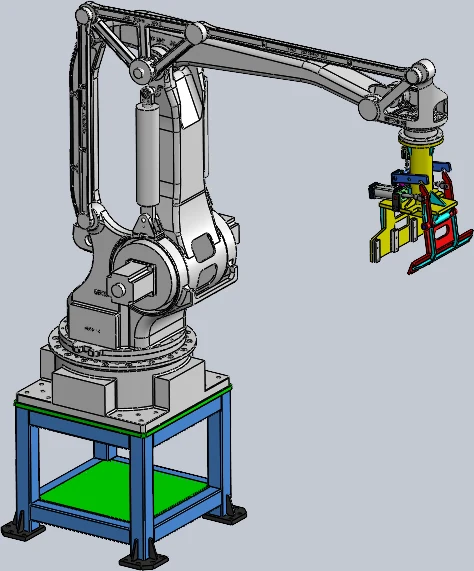
Recommended equipment list
- CR Series Six-Axis Industrial Robot
Local adaptation for United States and Canada
North American window and storefront fabricators often ask for inch-friendly drawings and 60Hz motors.
| Voltage | 208V/230V/460V options reviewed with local electrical contractors |
|---|---|
| Documentation | UL/CSA compatibility review notes prepared before configuration |