
How the cell works
For aluminum fabrication, the robot's role is usually decided by the fixture: when parts arrive in a repeatable position, the robot can run tack paths, hold pieces for a manual welder, or present assemblies to a positioner.
Each project reviews part tolerance, fixture design, and weld access before a path is proposed. The goal is a station where the robot handles the repeatable motion and the welder or weld package handles the process judgment.
Typical cell parameters
| Robot | CR series six-axis |
|---|---|
| Typical role | Part positioning, fixture holding, tack paths |
| Repeatability | +/- 0.05 mm class for taught paths |
| Fixture requirement | Repeatable part location is the deciding factor |
| Integration | Works with positioner and weld power source interlocks |
Arc-on time share in a supported station
Recommended equipment list
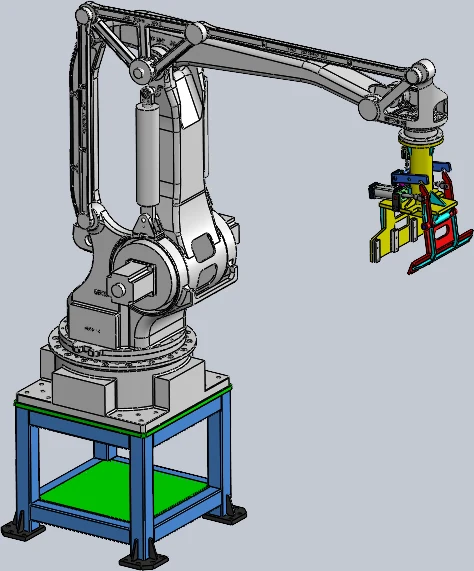
- CR Series Six-Axis Industrial Robot
Local adaptation for France, Maroc, Algerie, Tunisie et Afrique du Nord
Les ateliers de portes et fenetres d'Afrique du Nord demandent souvent des scies robustes, des commandes simples et des notes de formation.
| Voltage | 230V/400V 50Hz common configuration |
|---|---|
| Documentation | Dossier CE, notes de protection de securite et resume des parametres en francais peuvent etre prepares |