
How to Choose the Right Tonnage for an Aluminum Extrusion Press
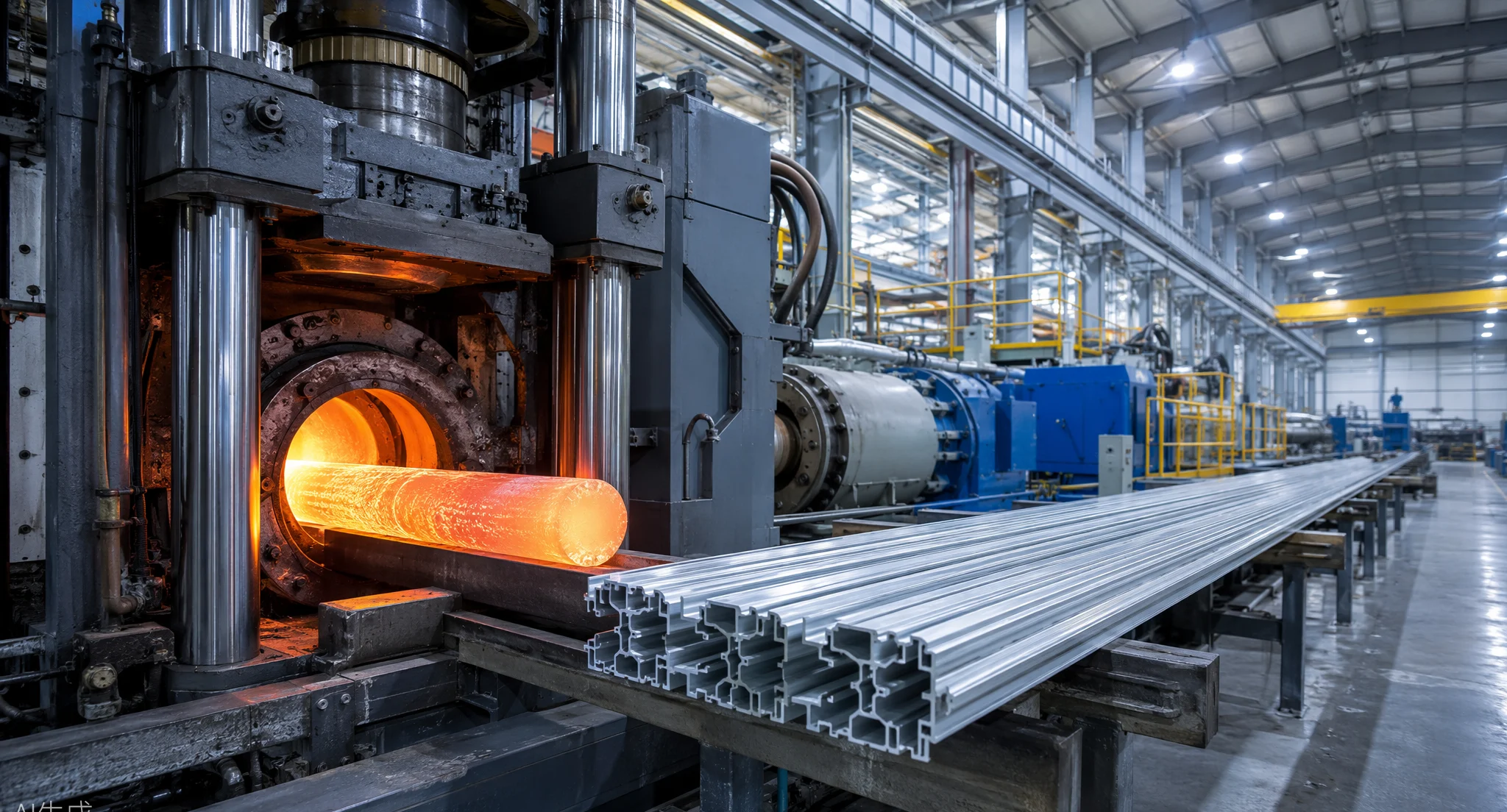
For most buyers, the first real specification question about an aluminum extrusion press is tonnage. Choose too little force and the press struggles to fill thin walls or harder alloys; choose too much and capital, energy and tooling costs rise without adding saleable output. This guide explains how to choose aluminum extrusion press tonnage with confidence, starting from the profile rather than the machine brochure.
What extrusion press tonnage actually means
Tonnage is the maximum force the press can apply to push the billet through the die. Suppliers express it in metric tons (T), meganewtons (MN) or US short tons (UST), which confuses many first-time buyers. One metric ton of force is roughly 9.8 kilonewtons, so a 1000T press delivers about 9.8 MN, close to 1100 UST. When a quotation says "1450T", read it as a press in the 14 MN class. Mixed units are a common source of selection errors: a press described as "2000 tons" by one supplier can mean 2000 UST, roughly 18 MN, while another means 2000 metric tons, roughly 19.6 MN. Always convert competing offers into one unit before comparing.
Start with the profile, not the machine
The profile decides the press. Two dimensions matter most. The first is the circumscribing circle diameter (CCD), the smallest circle that encloses the profile cross-section: a larger CCD requires a larger container and billet, and therefore more force. The second is the extrusion ratio, written as λ, which divides the container cross-section area by the profile cross-section area. Most production lines aim for λ in the 8 to 12 range for a balanced combination of pressure, surface quality and die life; thin-wall or wide profiles often need a higher ratio to fill consistently.
Solid versus hollow profiles
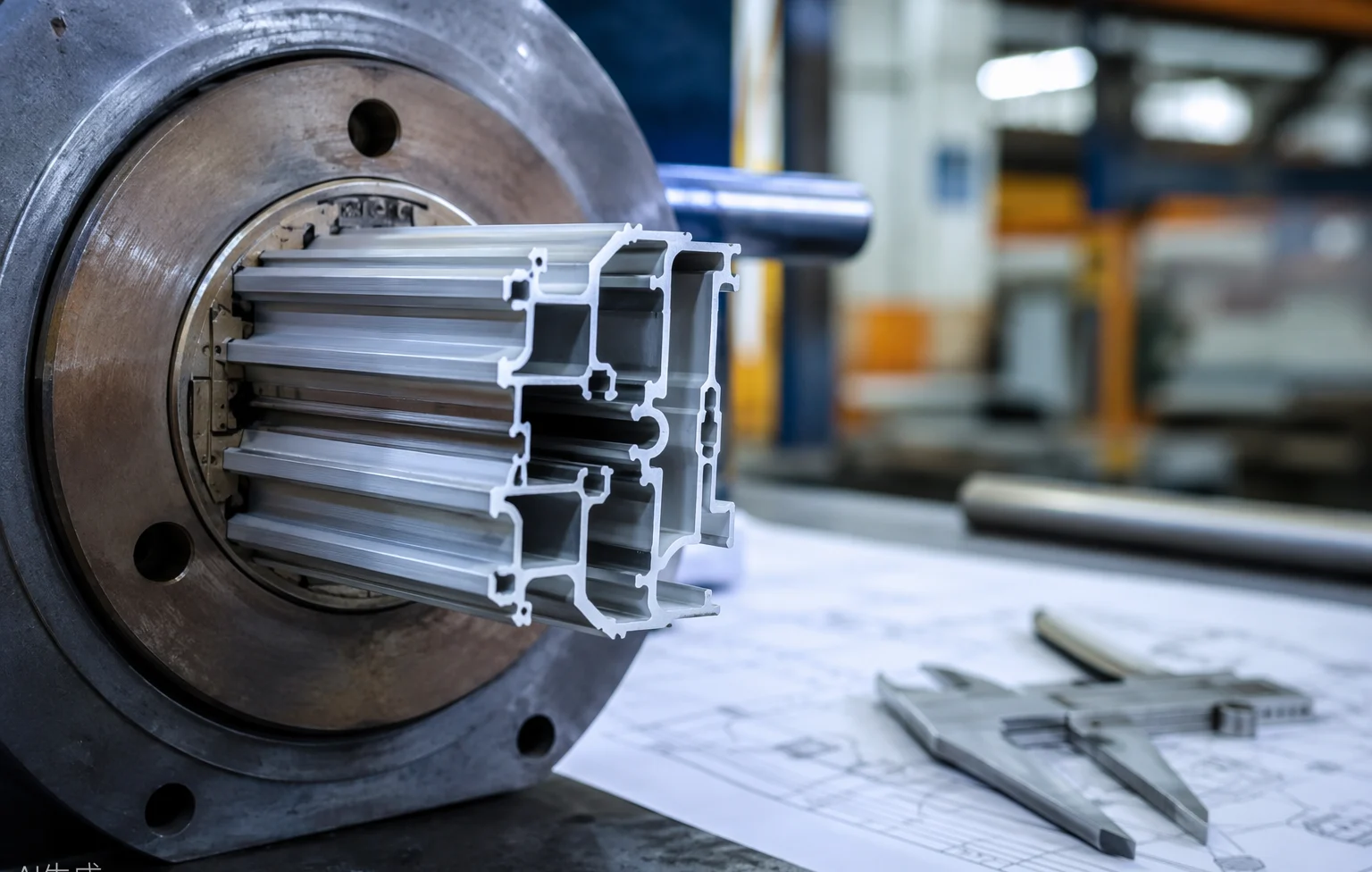
Hollow sections change the calculation. They are formed with porthole or bridge dies, where the metal stream splits around a mandrel and welds together again inside the tool. That extra flow work means a hollow profile of a given CCD generally needs a stronger press than a solid profile of the same size. When comparing extrusion press tonnage options, buyers planning mainly hollow work should budget at least one tonnage class above a solid-profile project of similar dimensions.
Match tonnage to alloy and daily output
Alloy choice moves the force requirement as well. Common 6xxx series alloys such as 6063 flow relatively easily, while harder 6xxx and 7xxx grades demand more pressure at the same section size. Daily output works differently: it mainly changes how many presses, shifts or containers a plant needs rather than the tonnage itself, although high-volume projects often justify a larger container and longer billet to reduce dead-cycle time between billets. Billet diameter follows the container size, which follows the press size, so the tonnage decision also fixes the raw material format a plant will buy for years.
Bigger is not automatically better
Oversizing carries its own costs. A larger press draws more energy per stroke, needs a larger furnace and handling line, and its bigger container adds dead-cycle time on small profiles. Tooling for a large container is also more expensive to make and to change. The right specification is a window: enough force for the hardest profile on the order book, plus a modest margin for future products, rather than the largest machine the budget allows.
Typical tonnage by application
| Application segment | Typical profile size | Recommended press tonnage | Notes |
|---|---|---|---|
| Doors, windows and curtain wall | Small to medium sections, CCD up to about 140 mm | 800–1450T (≈8–14 MN) | The workhorse range for architectural profiles and most export window systems. |
| Industrial frames and automation structures | Medium sections with thicker walls | 1450–1800T (≈14–18 MN) | Machine frames, conveyor structures and assembly-line profiles. |
| Automotive, rail and solar mounting | Large or wide sections, frequently hollow | 2000T and above (≈20 MN+) | Structural parts usually need larger containers and tighter process control. |
These ranges are industry-common reference points rather than fixed rules. The final number always depends on alloy, wall thickness, the target extrusion ratio and whether the section is solid or hollow.
A quick sizing checklist for buyers
A supplier can only size a press accurately when the project data is complete. Before requesting a quotation, prepare:
- Profile drawing with CCD, wall thickness and tolerance requirements
- Alloy and temper, for example 6063-T5 or 6061-T6
- Whether sections are solid or hollow, and the widest profile planned
- Target daily or monthly output and the intended shift pattern
- Downstream steps such as aging, machining or surface finishing
From tonnage to a working line
Tonnage is only the headline number. A productive line also needs a billet furnace, handling table, puller, quench and stretcher matched to the same profile range. The aluminum extrusion press category page and the related equipment pages show how these machines are grouped for real projects. Share a profile drawing, alloy, target output and destination market with the ZOYVAN team, and a suitable press tonnage and line layout can usually be proposed during the first technical review.